LAUSANNE, SWITZERLAND: The major part of the dancers at the 46th Prix de Lausanne is not from Europe! In fact Europeans are rare, only ten out of 74 are Europeans. Australia, China, South Korea, USA and Japan are well represented with 56 dancers. In total 26 boys and 48 girls.
The dancers can’t chose their own piece, the contest gives the dancers a selection of choreographies to show their ability on stage.
Prix de Lausanne is different from other contests, due to the fact that competitors can choose among five schools at the beginning of the week, where they would prefer to study. The school then decides if they want to meet them in order to take up a discussion regarding their future studies.
This is maybe one of the reasons why so few competitors are from Europe. Many students have already chosen a favourite school where to study in Europe, and they are not so keen to change schools. For students from Asia attending a European school with high reputation is of course already a goal.
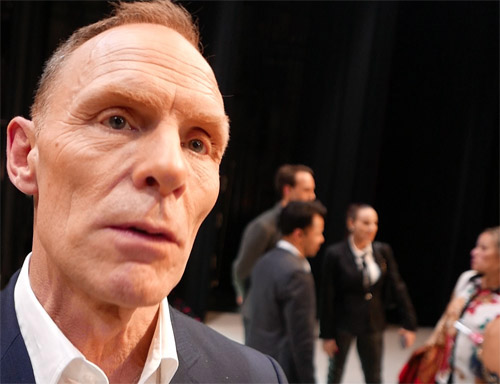
Ted Brandsen, President of the jury 2018. Photo Cristian Hillbom
Ted Brandsen, President of the Jury, told Dansportalen after the finals, when I asked him ‘where are the European dancers’?
“It’s fluctuates a bit from year to year, we see a lot of private schools in the world who want their students to come to big schools in Europe. But in general, French students on this level tend to go to the Paris Opera School, and the Swedish students go to the Royal Swedish Ballet School.”
“They don’t seem to need what Prix de Lausanne can offer because they have already made that decision on this level of education.”
“I think it is important what Prix is planning, to do more pre-selections, to go more out, to competitions and gatherings, and it is also important for European dancers to show themselves and get the possibility to go somewhere else. It is also interesting to notice we have got more comptetitors from Asia and South America.”
“Ballet is a very difficult profession, the students invest a lot and the outcome is not sure. In Europe I am afraid that is not what our children are learning these days in school or at home. I think that has something to do with it as well. It is a level of being comfortable. That is not compatible with the demands of this profession”, says Ted Brandsen.
Prix de Lausanne has a different way of judging the candidates. It is not only the variations they do on stage, also the classes are concidered. 25% of the marks are from contemporary class, 25% from classical class, 25% contemporary variation on stage and 25% classical variation. In the final it is 50% from the contemporary variation and 50% from classical variation. The jury follows them all the week and there are also closed classes only for the jury and partner schools.
Ted Brandsen continues: “It is for the jury and partner schools to get to know the candidates and see how they work. It was very interesting because you have candidates that gets to dance on stage very much. But you also have some candidates who practise one variation for 1,5 minute for two years, and of course they look very good.”
“But there are other things too, they have to learn new material, like in the real world, and they can’t do that. We have to see all the different aspects. How dance students learn things, how they pick up things is vital for us to know and understand, also for company directors and school teachers.”
There were 380 dancers who sent their videos to Lausanne, of them 78 were selected to participate in the contest. In the end 74 came to Lausanne.
Norway has sent two dancers, Gabriel Gudim in the junior group and Helena Byrt in the senior group.
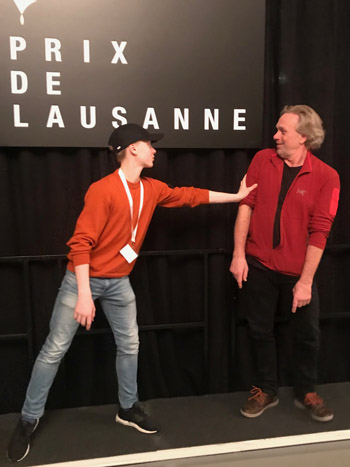
Now its my turn to be on stage! Photo Cristian Hillbom
Gabriel Gudim is a student at the Norway Opera and Ballet School.
“It was amazing I even got here,” says Gabriel when I meet him. The classical was very obvious. But we communicated a lot about my variations, which contemporary variation was best for me. And “A Solo for Diego” was good because I just needed to relax and enjoy dancing, which I did. But the whole contest has been an amazing experience for me, learning a lot, meeting new friends, whom I will know for ever…”
“It is sad not to be chosen for the final, but I got the schools I wanted to talk to and I am very happy for that. I finish the ballet school at the Opera in June, so now I am open to see which offer I take, so it’s a little bit hectic just now”, says Gabriel. He started to dance when he was 8 years old. His father, Ketil Gudim, was also a dancer at the Norwegian National Ballet. The apple does not fall far from the tree!
“I think that is a nice motivation for me to live up to, to be as good as my father was,” says Gabriel. And we had to take a picture of both of them of course!
* * *
The winner of Prix de Lausanne 2018 was Canadian Shale Wagman, he started to learn dance when he was 13! And now he won the Prix!
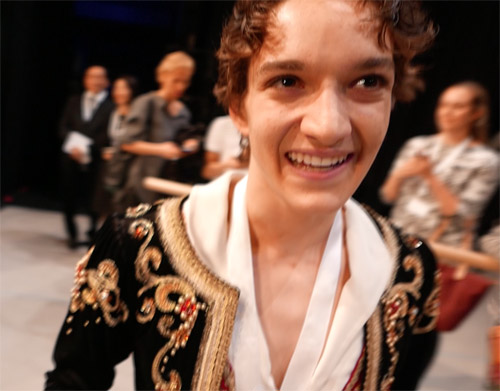
Shale Wagman was very overwhelmed. Photo Cristian Hillbom
Dansportalen met Shale Wagman on stage after the final:
You are very overwhelmed; this was very emotional for you?
“I felt it was such a dream for so long and now it has come true. Not only the gold medal, it is also an experience even to be in the finals, it was just an amazing time. This whole week was just an honour. The working progress, to meet with so many great dancers and I am so overwhelmed to be so connected to the public, and that is also my goal, maybe touch someone’s feelings.
How did you prepare for this week?
”I have done it together with my teacher and headmaster at the Académie Princess Grace in Monaco. It is four years work, not only with these variations, just the way to be a dancer.”
What is your plan now after the contest?
”I would love to work in a classical company, and dance as much as possible and share my heart with the audience.”
“I also love contemporary dance so I want to find a company that has a repertoire that includes both classical, contemporary and neo classical, it is my dream. And to be able to expand myself as an artist, in as many ways as possible”, says Shale Wagman.
Shale will be joining the English National Ballet for the season 2018-19.
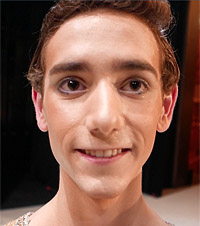
Eric Snyder.
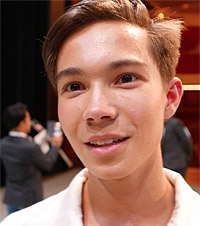
Yerg Makani.
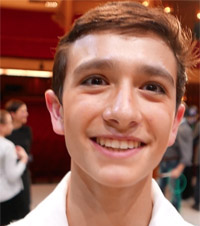
Finnian Carmeci.
Comments from a bouquet of dancers from the US:
Erik Snyder: I just kept training as hard as I could, working on my pieces of course. Definitely the most demanding was finding the motivation to train every single day. I am proud of myself and the work I put in it.
Yerg Makani:Consistency is the key; I tried not to over work my pieces. I rehearse every day, doesn’t matter how I feel! If I was tired I would push myself in the studio and at least go through one piece.
Finnian Carmeci:I prepared myself every day the last four-five months. And I also took some mental preparation. We have a lot of drive and we just push us. [At my question when five of seven candidates from the US came to the final].
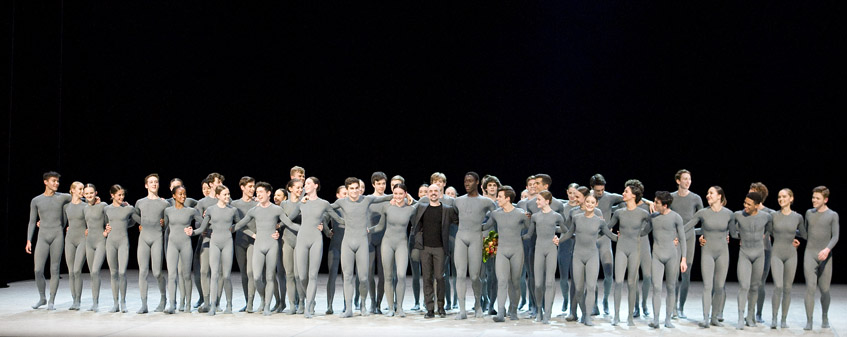
Goyo Montero collaborated for the Partner Schools Choreographic Project! 51 students from the Prix de Lausanne’s partner schools spent eight days with the choreographer Goyo Montero (Prize Winner #PrixdeLausanne1994, member of the jury in 2012 and 2017, Director and main Choreographer of the Ballett Staatstheater Nürnberg) to learn and rehearse a new piece – Pulse – performed during the 2018 Finals’ Interlude. Photo Cristian Hillbom
Jean-Christophe Maillot, choreographer and artistic director at Les Ballets de Monte Carlo, has been awarded a Life Time Achievement Award by Prix de Lausanne.
Prix de Lausanne has, within the arrangements for the 46th competiton, wished to honor the French choreographer for 30 years of dedication to the world of dance,
Himself a laureate at the competition in 1977, Maillot has been a member of the jury at the competitions in 1986, 1988 and 1992 and also served as chairman of the jury in 1994, 1997, 2000 and 2012.
Jean-Christophe Maillot recieved his price at the final of Prix de Lausanne. He was given the price by candidat dancer, Matthew Maxwell from Australia, together with Prix de Lausanne CEO and Director Shelly Power.
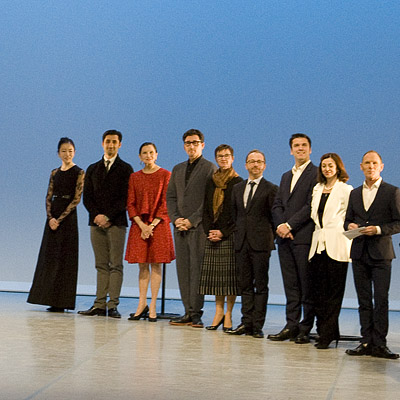
Jury 2018 Prix de Lausanne. Photo Cristian Hillbom
The Jury
Mr. Ted Brandsen Artistic Director of Dutch National Ballet – President of the jury
Ms. Nina Ananiashvili Artistic Director of State Ballet of Georgia – Vice President of the jury
Ms. Yuriko Kajiva Principal Dancer of Houston Ballet, Prize Winner Prix de Lausanne 2000
Mr. Davit Karapetyan Artistic Director of Pennsylvania Ballet Academy, Prize Winner Prix de Lausanne 1999
Ms. Birgit Keil Director of Academy of Dance, Mannheim
Mr. Oliver Matz Director of Zurich Dance Academy
Ms. Lisa pavane Director of The Australian Ballet School
Mr. Christopher Stowell Associate Artistic Director of The National Ballet of Canada
Mr. Demis Volpi Choreographer and opera Director
The 8 finalists
Eight finalists were awarded a scholarship that provides them with the unique opportunity to choose among the 72 prestigious partner schools and companies of the Prix de Lausanne. where they can continue their studies.
During the week, jury members have observed the candidates performing their classical and contemporary variations. This year, the Artistic Director of Het National Ballet, Ted Brandsen, was President of the nine jury member panel. As internationally-renowned dance professionals, they selected the eight most promising talents.
The 8 Prix de Lausanne 2018 Prize Winners are:
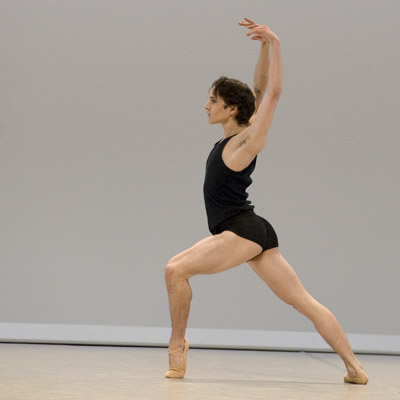
Shale Wagman in Croma by Wayne McGregor. Photo Cristian Hillbom
407 – WAGMAN Shale – 17.9 years old – Canada
- Don Quixote
- Chroma
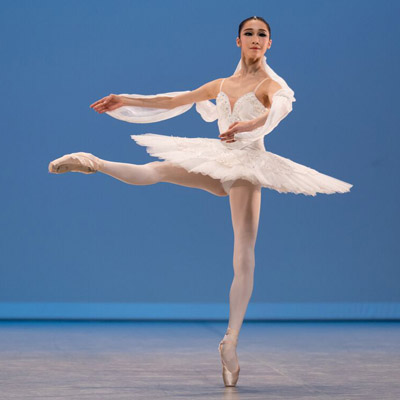
Hanna Park in La Bayadère. Photo Gregory Batardon
112 – PARK Hanna – 15.5 years old – South Korea
- La Bayadère
- 1st Flash solo 1
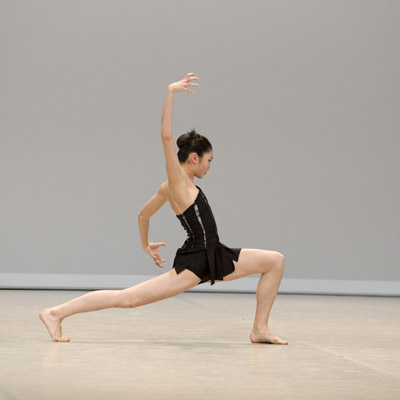
Wenjin Guo in Rossini Cards. Photo Cristian Hillbom
134 – GUO Wenjin – 16.8 years old – China
- Don Quixote
- Rossini Cards
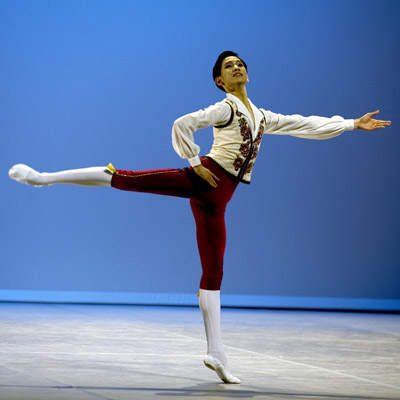
Junsu Lee in La Fille mal Gardée. Photo Cristian Hillbom
207 – LEE Junsu – 16.1 years old – South Korea
- La Fille Mal Gardée
- Furia Corporis
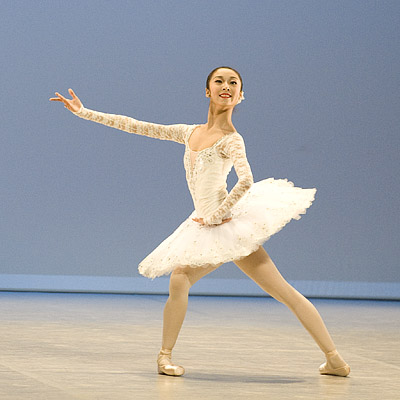
Xinjue Zhao in Grand Pas Classique. Photo Cristian Hillbom
309 – ZHAO Xinyue – 17.11 years old – China
- Grand Pas Classique
- Becomings
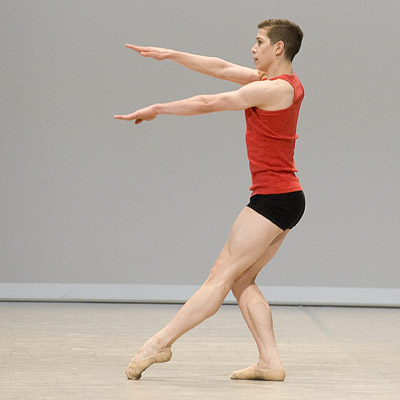
Miguel Aranda in Jorma Elo’s Plan to B. Photo Cristian Hillbom
412 – ARANDA MAIDANA Miguel Angel David – 18.6 years old – Paraguay
- Paquita
- Plan to B
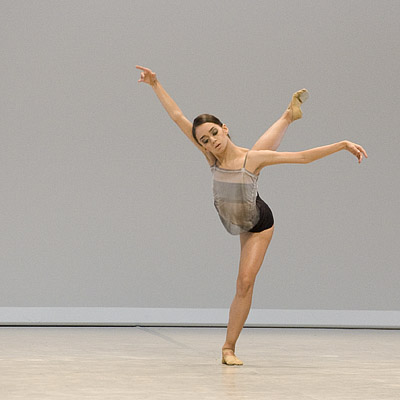
Carolyne Galvao in Croma. Photo Cristian Hillbom
303 – GALVAO Carolyne – 17.5 years old – Brazil
- Grand Pas Classique
- Chroma
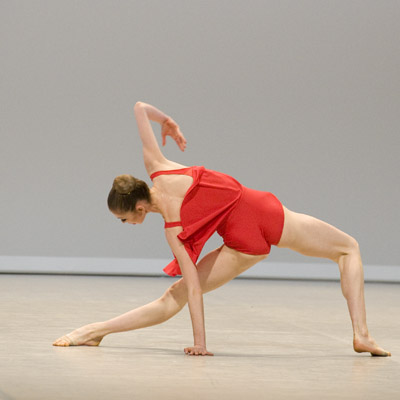
Aviva Gelfer in Touch, Feel, Sense. Photo Cristian Hillbom
135 – GELFER-MÜNDL Aviva – 16.10 years old – USA
- Paquita
- Touch, Feel, Sense
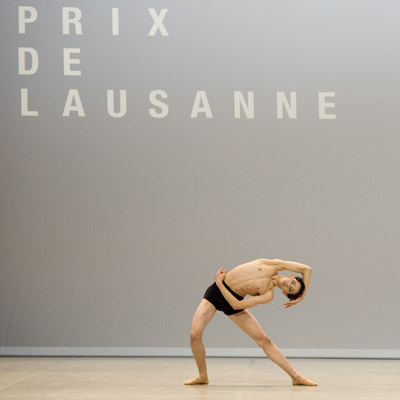
Junsu Lee in Furia Corporis. Photo Cristian Hillbom
Contemporary Dance Prize
207 – LEE Junsu – 16.1 years old – South Korea
For his interpretation of : Furia Corporis
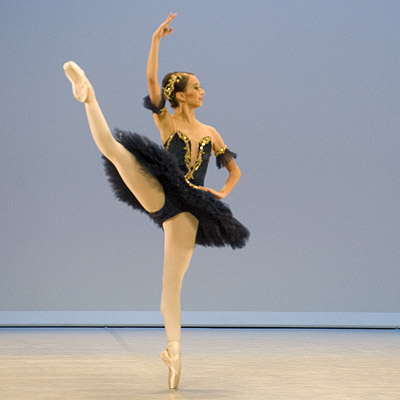
Carolyn Galvao in Grand Pas Classique. Photo Cristian Hillbom
Audience Favourite Prize
303 – Carolyne GALVAO – 17.5 years old – BRAZIL
- Grand Pas Classique
- Chroma
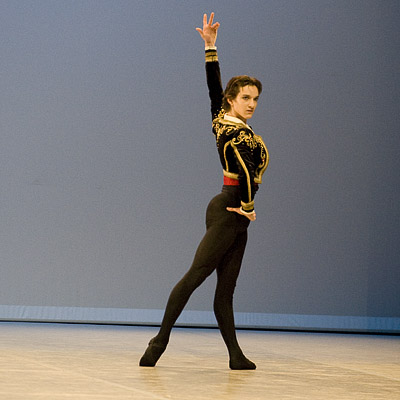
Shale Wagman in Don Quixote. Photo Cristian Hillbom
Rudolf Nureyev Foundation Prize
407 – WAGMAN Shale – 17.9 years old – Canada
- Don Quixote
- Chroma
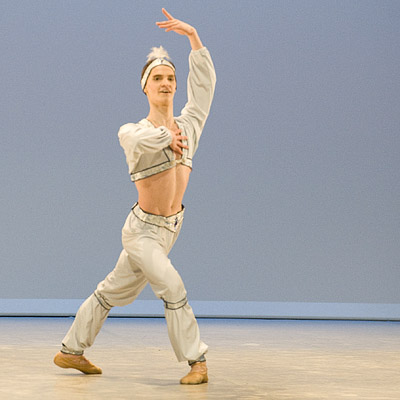
Lukas Bareman in La Bayadère. Photo Cristian Hillbom
Best Swiss Candidate Prize
416 – BAREMAN Lukas – 18.1 years old – Belgium
- La Bayadère
- Becomings
Finalists who have not been awarded any prize receive the “Finalist Award” (a sum of CHF 1’000.-).
Cristian Hillbom
Lausanne, Schweiz
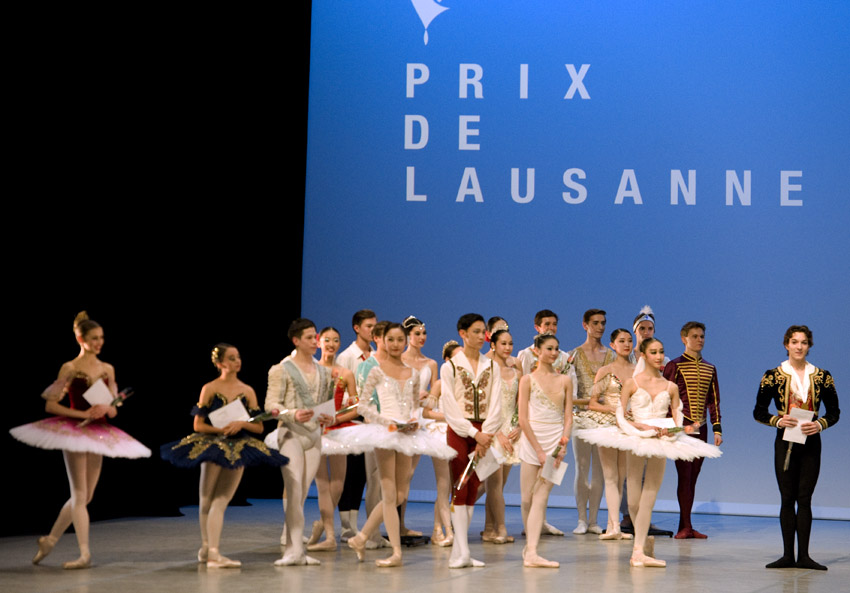
Huvudbild: Eight dancers were rewarded after the final, surrounded by 13 finalists. Photo Cristian Hillbom